Date: June 9, 2026
System: Lithionics 12 V battery, Xantrex inverter, rooftop air conditioner
Location: Dinette electrical compartment and battery compartment
Initial symptoms
The rooftop air conditioner was drawing approximately 1.37–1.7 kW. After running for approximately five to ten minutes, the Xantrex inverter voltage would fall to approximately 12.1 V or below, produce a low-voltage warning, and shut down.
On several occasions, the entire coach lost power. The Lithionics battery also disappeared from the Bluetooth app and had to be powered off and restarted before the app would reconnect.
When the air conditioner was turned off, the Xantrex voltage immediately recovered to approximately 13.0 V.
Rooftop AC inspection and cleaning
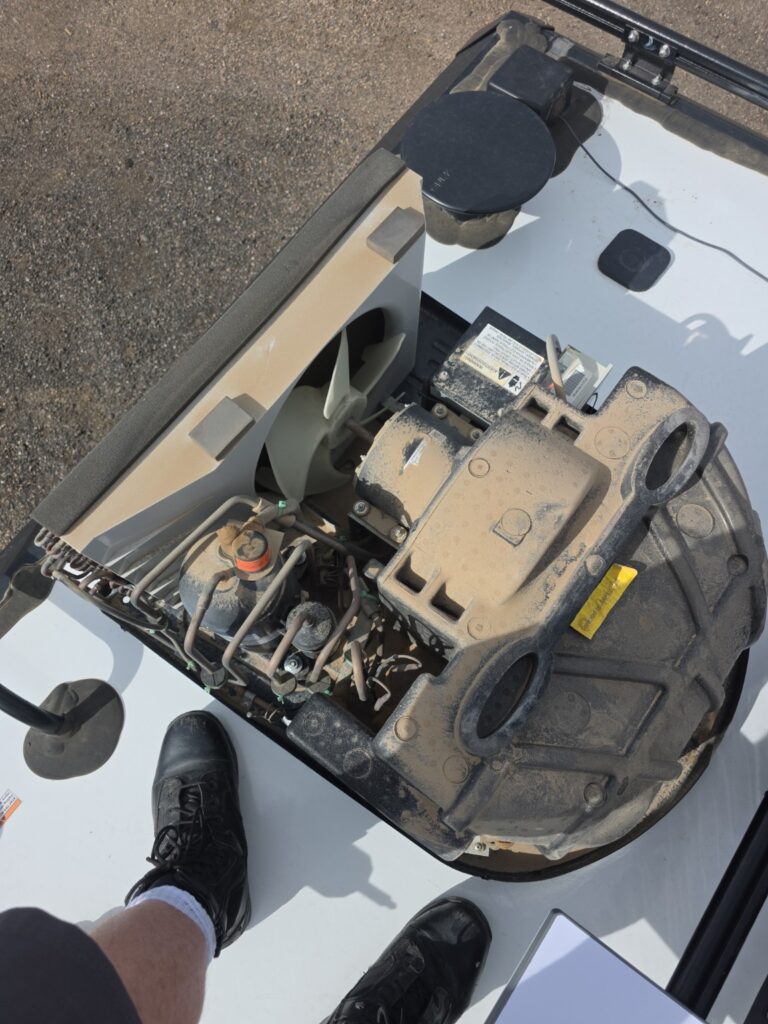
The rooftop air conditioner condenser coil was dusty but not obstructed. The coil was cleaned with compressed air and a gentle water rinse. After cleaning, the fins were visibly open and light could be seen through the coil.
The cleaning reduced the observed AC load somewhat, but it did not eliminate the inverter-voltage problem.
Battery testing under load
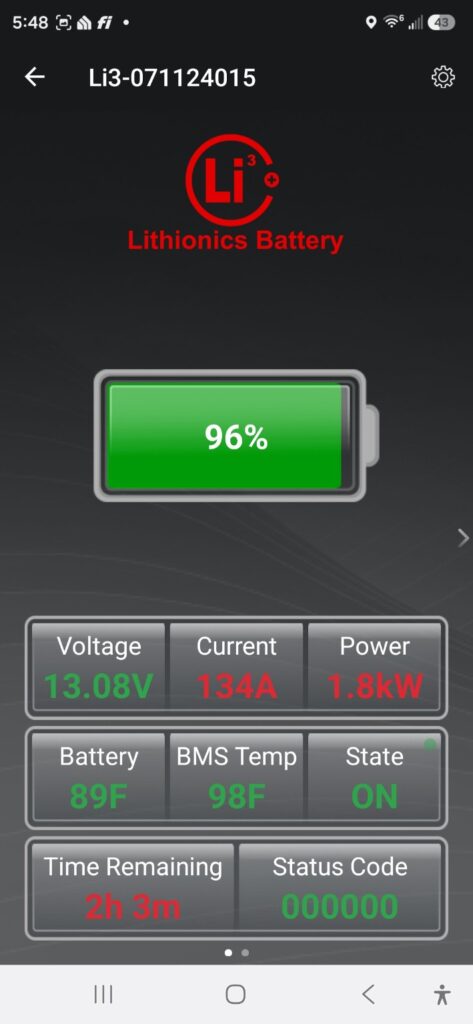
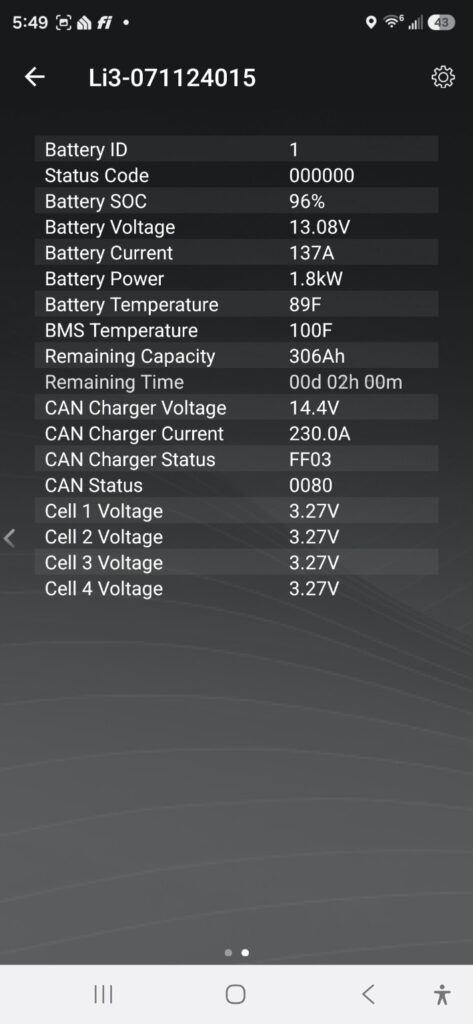
With the air conditioner running, the Lithionics app initially showed:
- Battery voltage: approximately 13.08 V
- Battery current: approximately 137 A
- Battery power: approximately 1.8 kW
- Cell voltages: approximately 3.27 V each
- Cells balanced
- No active battery fault code
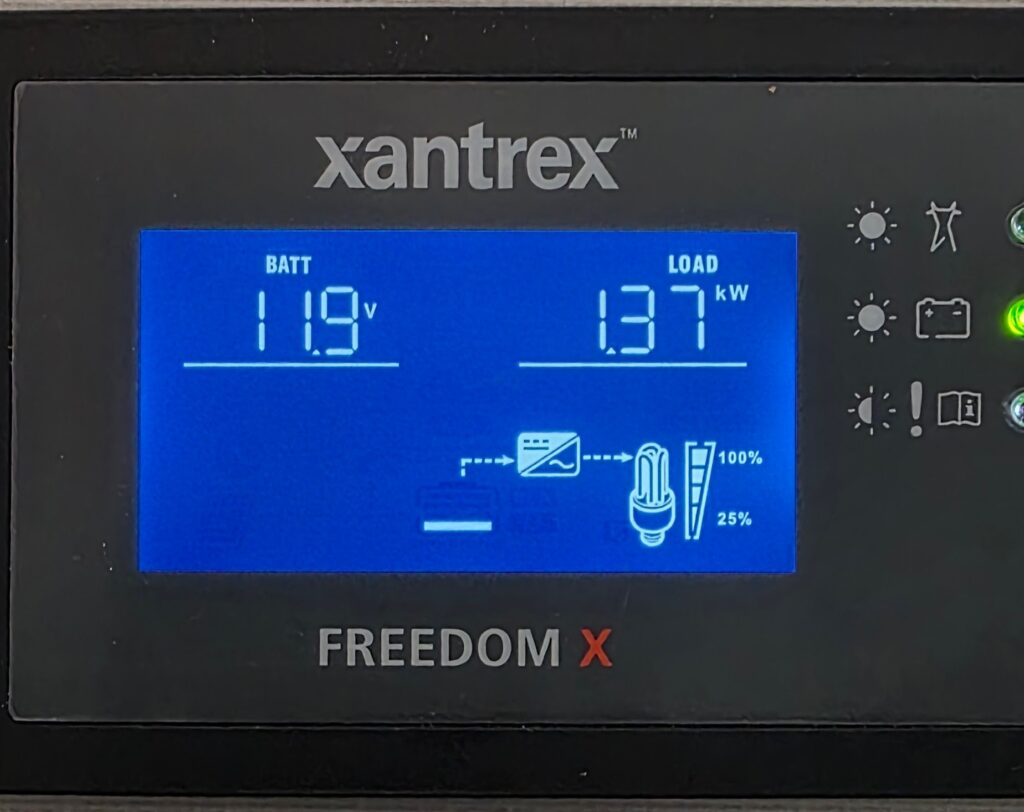
At the same time, the Xantrex was displaying only approximately 11.9 V.
This indicated that either there was significant voltage loss between the battery and inverter or the Lithionics app voltage was not accurately representing the voltage at the external battery terminals.
Thermal inspection and disconnect-switch failure
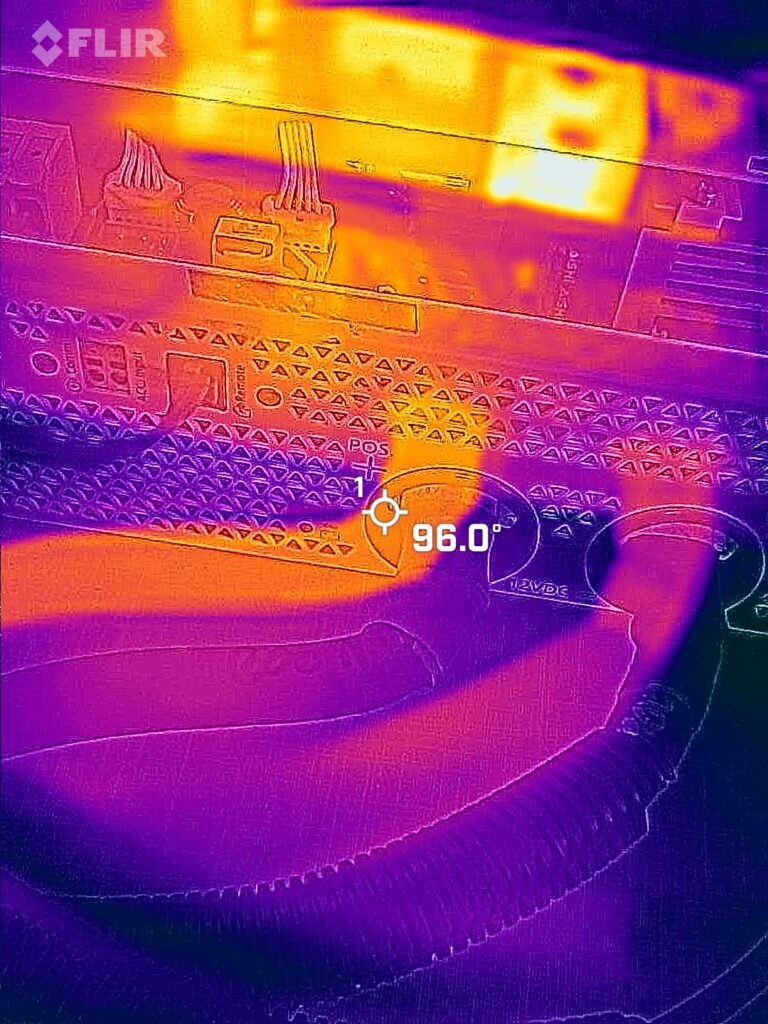
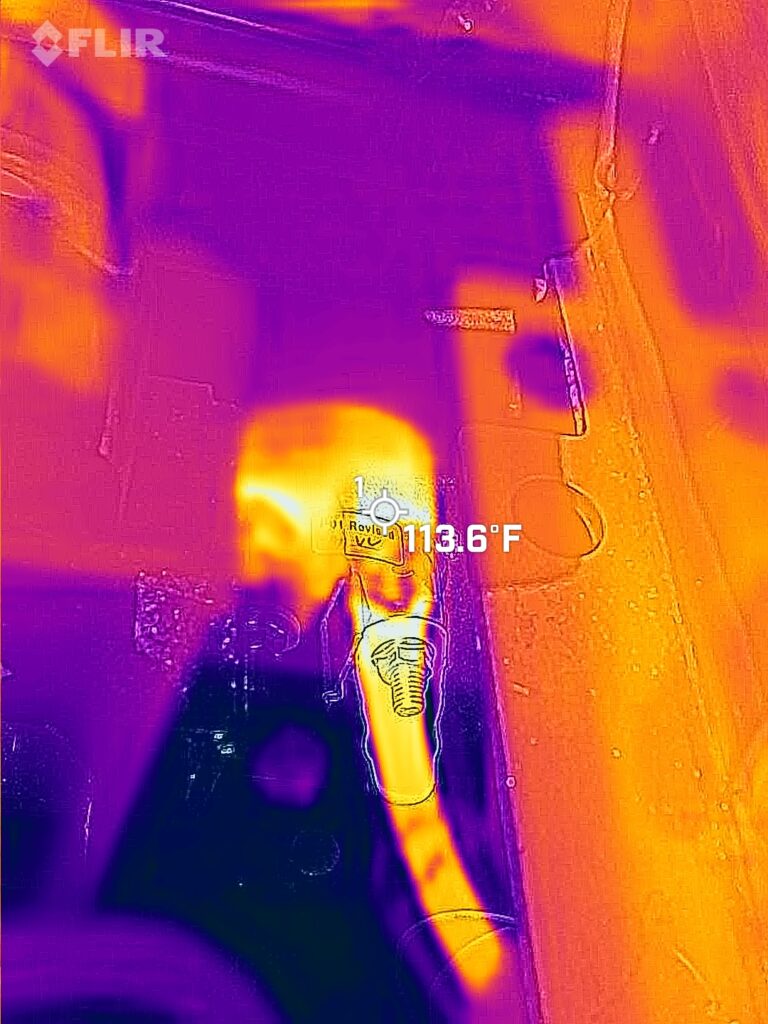
A FLIR camera was used to inspect the battery cables, inverter connections, and rotary inverter disconnect switch.
The cable near the rotary disconnect was warmer than the battery cables. The disconnect-switch terminal could be moved even though the nut on the cable lug felt reasonably tight.
When attempting to remove the cable, the plastic switch housing broke and the terminal stud pulled out of the housing. There was no obvious arcing, pitting, charring, or visible damage on the switch contacts or cable lugs.
The switch housing may have already been cracked or weakened, allowing the stud or internal contact assembly to move under load.
Replacement-switch installation
A replacement rotary disconnect switch was installed.
With no major load:
- Lithionics app: approximately 13.32 V
- Battery lugs measured by multimeter: approximately 13.2 V
- Main busbars: approximately 13.2 V
- Xantrex DC terminals: approximately 13.2 V
This confirmed that there was no meaningful voltage loss through the system at rest.
With the rooftop AC running:
- Xantrex initially measured approximately 12.5 V
- Xantrex panel and multimeter agreed
- Voltage settled around 12.2–12.3 V with the seat and compartment open
- Voltage drop across the new disconnect switch was approximately 0.04 V
- Current was approximately 137 A
- The AC ran more than 25 minutes without shutting down
A 0.04 V drop at 137 A represents approximately 5.5 W of heat in the switch.
Temperature measurements after replacement
After extended AC operation with the dinette seat open:
- Xantrex cable-lug area: approximately 96°F
- Rotary disconnect switch: approximately 113–114°F
- Inverter cable insulation did not feel unusually hot
- No burning, charring, pitting, or damaged insulation was found
The switch was the warmest component, but its temperature appeared consistent with several watts of electrical loss in a compact plastic housing.
Dinette-compartment airflow issue
After the seat and electrical compartment were closed, the Xantrex voltage fell from approximately 12.2–12.3 V to approximately 11.9 V within about 15 minutes.
A food-storage box behind the dinette seat was occupying much of the available airflow path behind the seat.
After removing the box, the Xantrex voltage recovered fairly quickly to approximately 12.1 V and continued operating without alarms or shutdowns.
The compartment now contains more heat-producing equipment than it did originally, including:
- Xantrex inverter
- Victron solar charge controller
- Wakespeed alternator controller
- Rotary disconnect switch and high-current cabling
Both the Victron and Wakespeed units have substantial heat sinks and contribute additional heat to the enclosed space.
Final operating test
The rooftop AC ran for approximately 35–40 minutes total.
Approximately 20–25 minutes of that test was completed with the dinette seat closed.
Final readings:
- Xantrex panel: approximately 12.0–12.1 V
- Multimeter at Xantrex terminals: approximately 12.27 V during one measurement
- Lithionics app: approximately 12.85–12.86 V
- No Xantrex alarm
- No inverter shutdown
- No complete coach power loss
- No abnormal cable heating
The Xantrex panel voltage and direct multimeter measurements were reasonably close. The Lithionics app consistently indicated a somewhat higher voltage than measurements taken elsewhere under load and should not be treated as the sole reference for inverter-terminal voltage.
Conclusion
The damaged rotary disconnect switch appears to have been the primary cause of the rapid voltage drop and inverter shutdown.
Restricted airflow and heat buildup behind the dinette were also contributing factors. The storage box was blocking an important airflow path, and the added Victron and Wakespeed equipment increased the thermal load in the compartment.
Replacing the switch substantially improved system performance. Removing the storage box and restoring airflow further improved stability.
Current operating plan
- Leave the airflow path behind the dinette unobstructed.
- Monitor Xantrex voltage during extended AC use.
- Periodically inspect the switch, inverter terminals, and cables with the FLIR camera.
- Keep the current replacement switch installed for the trip.
- Carry or install the higher-amperage replacement switch already ordered from another manufacturer.
- Do not lower the Xantrex low-voltage cutoff unless shutdowns continue after the electrical and cooling issues have been corrected.
Planned improvements
- Evaluate adding thermostatically controlled ventilation fans to the dinette electrical compartment.
- Provide a low intake path and a high exhaust path for airflow.
- Confirm that the Victron and Wakespeed heat sinks have adequate clearance and orientation.
- Recheck switch voltage drop and temperatures after installing the higher-rated switch.
- Continue comparing Lithionics app voltage with direct multimeter measurements under load.