Updated: January 2026
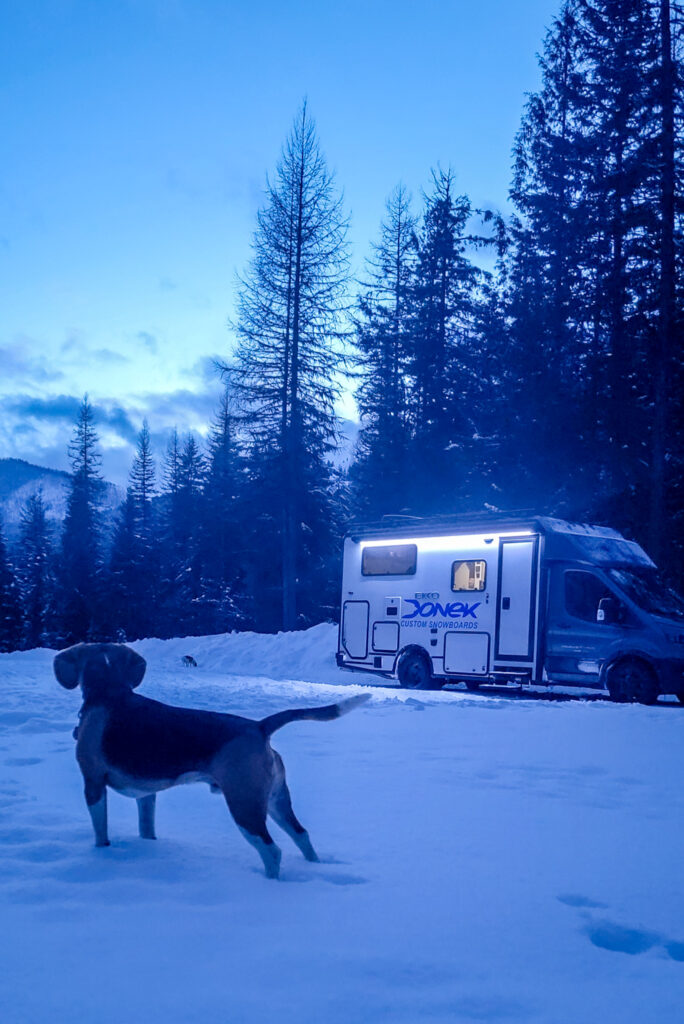
These are field-tested notes from winter travel and camping in my Winnebago Ekko across Colorado, Wyoming, Montana, Idaho, and parts of Canada. This started as lessons from the 2023–2024 winter season and has been updated with what I’ve changed and observed through January 2026.
I don’t live in the Ekko full-time year-round, but I spend extended stretches in it during winter travel and have regularly camped in temperatures down to -20°F to -30°F.
Thermal Weak Points
Above and Below the Windows
The biggest heat loss isn’t the glass — it’s the aluminum framing above and below the windows, which conducts cold into the living space.
What helped:
I cut and press-fit ¾” foam insulation board into these areas for winter use. This made a bigger difference than insulating the window glass itself.
Entry Door and Frame
The metal door frame gets ice-cold and conducts a lot of heat out. My door doesn’t seal perfectly, which makes this one of the most noticeable remaining heat loss points.
Next step:
A thermal camera pass is planned to pinpoint where the worst losses are around the door/frame before deciding what to change.
Heating Strategy
Propane Heat While Driving
This isn’t something you’ll see officially recommended, but it’s what has worked reliably for me.
I run both the Truma water heater and furnace on propane while driving in extreme cold. It’s been the most consistent way I’ve found to keep the rig and systems above freezing on long drives.
I have the Truma electric antifreeze kit installed, but the propane-only approach has worked well enough that I haven’t seriously tested the antifreeze kit as a primary strategy. If I were in a place where running propane while driving could realistically cause a major fine or issue, I’d experiment with it more, but I’m skeptical it would handle deep cold on its own.
Electric Heat
Electric heat can absolutely be useful, and it can save propane if:
- you’re on shore power
- or you’re trying to stretch propane and avoid refills
I’ve used a small electric heater successfully:
- while traveling in Canada
- on hookups
- and experimentally via battery for ~3 hours before switching to the generator and continuing
What works best:
- Put the heater in the main living area near the dinette
- Run the Truma/furnace circulation fan at level 6 to move heat
My cutoff: I generally wouldn’t rely on electric heat below about 20°F.
At that point, you’re not pushing enough heat into the under-coach compartments. You end up mostly recirculating cabin air while the compartments can drift significantly colder than when the Truma furnace is doing the primary heating.
Electric heat is a good tool — just not the tool I’d choose as the primary system heat below ~20°F.
Thermal / Comfort Setup
Cab Curtain Fix
The factory cab curtain is a major weakness because it hangs ~1.5–2 inches above the floor, which lets cold air pour in from the cab.
- Short-term workaround: stuff a blanket under it at night
- Permanent fix (what I did): buy fleece (Walmart) and sew a strip onto the bottom to extend it another 2–3 inches so it seals to the floor
The permanent fix is dramatically better than dealing with blankets every night.
Floor Insulation
The floor gets brutally cold in winter. This season I covered nearly the entire floor with EVA foam interlocking puzzle mats (Costco), cut tight to fit.
- Massive improvement in how warm the coach feels (especially feet)
- Downside: seams can separate slightly and trap dirt/debris
Long-term I’d prefer a single-sheet solution (SeaDek or similar), but even the puzzle mats made a huge difference.
Sleeping Setup
- Heated blanket under the mattress pad, turned on ~15 minutes before bed
Keeps the bed warm without overworking the furnace overnight.
Moisture and Plumbing Management
At around -20°F, I’ve had the shower drain freeze overnight even after using it the night before.
What helped:
- Leave the bathroom door cracked ~6″
- Open the cabinet under the kitchen sink overnight
- Let warm air circulate around plumbing
In sustained deep cold, I keep the Truma water heater in “Comfort” mode overnight and while driving.
System Observations
- I found a few partially crushed heating ducts and straightened them. No dramatic change, but worth checking.
- In deep cold, the rig seems to plateau around ~62°F overnight even with the furnace working hard. That feels like a realistic baseline for an unmodified Ekko.
Notes Going Forward
I’ll keep updating this as I test:
- the electric antifreeze kit (if/when I do)
- better door sealing/insulation after thermal imaging
- a cleaner single-sheet floor solution
This post exists so I don’t forget what works when temperatures get genuinely cold.